Mni Owe Sni Prayer Camp

Prayer Camp
Mni own sni
On a cold day early in February a set of 4 Tipis were set up on sacred Dakota land in the National Park land at Coldwater Springs, across the highway from the Whipple Federal Building. It birthed a month long fluid space that brought complex feelings, hope, and moments that shifted persepctives and lives. Once the group of tipis were set up on the land a intentional sacred fire came after with it being led by mostly by young Indigenous people. The camp shifted in size to meet different needs, and resources and supplies often overflowed back into the community to support others.
The land here holds much history—pain, resistance, growth, and healing. It holds a history of gatherings of Indigenous people from all tribes, offering a sacred space and a place of peace for all who came there. But it also holds deep pain: in the 1800s, white settlers and colonizers built a concentration camp nearby at Fort Snelling, where hundreds of Dakota people were killed and starved. This space also has a history of resistance, from tree sits to save ancient oaks to Water and Land Protector camps guarding the springs. Once again, in 2026, it became a space of gathering at this prayer camp. People came to find healing, to reconnect to their culture and spiritual practices.
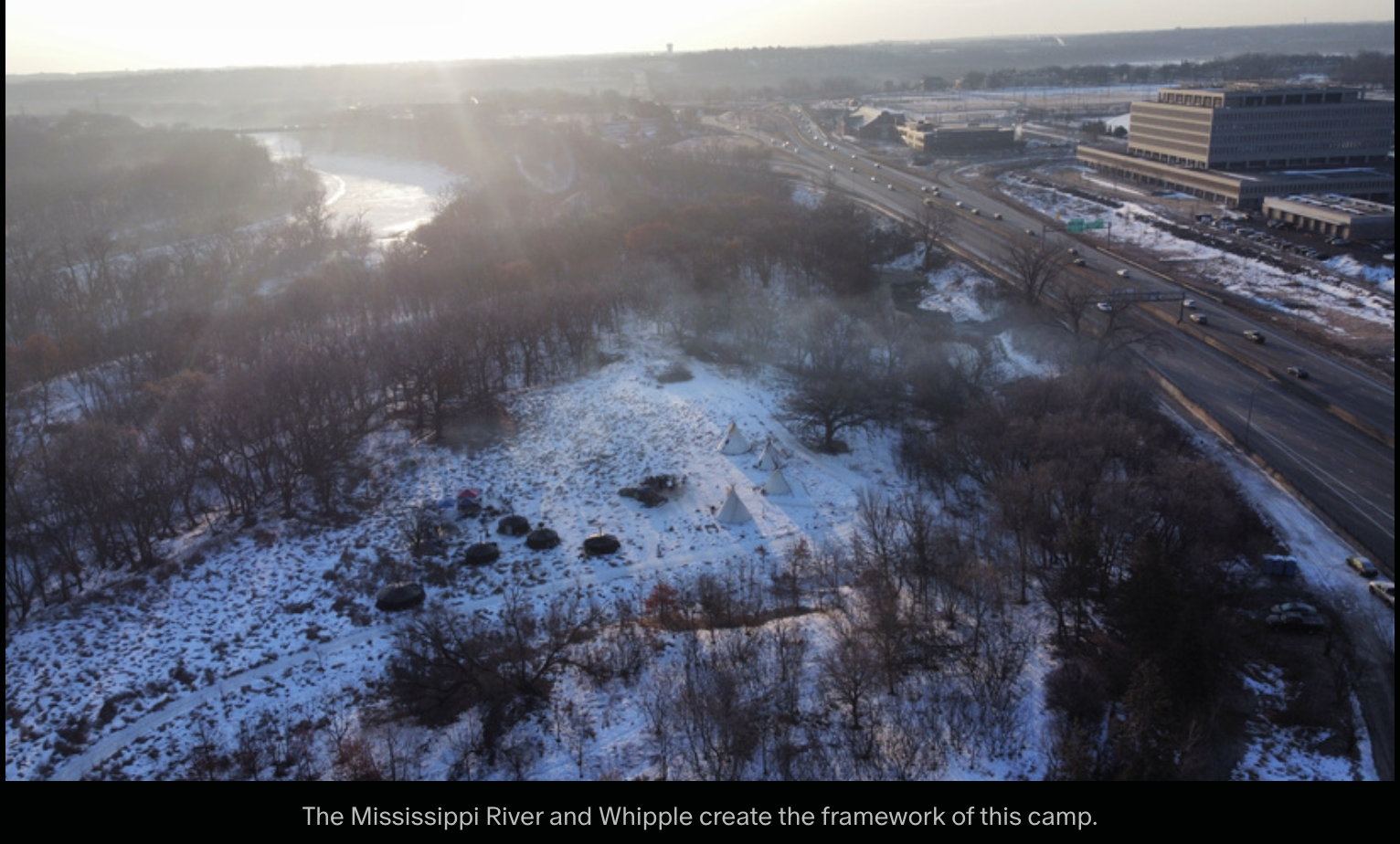
People came to find healing, reconnect to their culture, and practice spiritual traditions. For many Native people in the Twin Cities, there aren’t spaces to practice their ways openly, raising questions about who has access to the land. This is a sacred site, though federally owned, and there was pushback from “powers that be” as well as Indigenous leadership from outside the area. Calls to close or move the camp came throughout its existence.
Adding to the complexity, the surrounding land has been under conservation and restoration work, designated as pollinator land (though in winter, everything is dormant and under snow). Other claims suggested the tipis were near or on burial grounds, though those familiar with the land pushed back on those claims. While there are burial sites around the Twin Cities, specific locations at Mni Owe Sni (Coldwater Springs) have not been pinpointed. The old development of a major US Bureau of Mines research center—including a camp, hotel, and research facilities studying mining techniques and safety for 40 years—likely disturbed or destroyed Native burial grounds in the area. Today, only old foundations, piles of rock, and random metal remnants remain, with nature reclaiming much of the land. The mining research did contribute protocols later implemented nationwide, but this space and the camp at Coldwater Springs in 2026 carried immense weight and history.
For many, this history was unknown until visiting the site, which helps explain why some looked down on it, why for others it offered so much, and why some experienced a mix of feelings. Ultimately, the camp was taken down by those holding space after a four-day fasting ceremony, concluding the event in a good way. The only remnant left was the framework of the sweat lodge with prayer ribbons, which National Park staff removed sometime within the following week after the camp ended on March 15th.
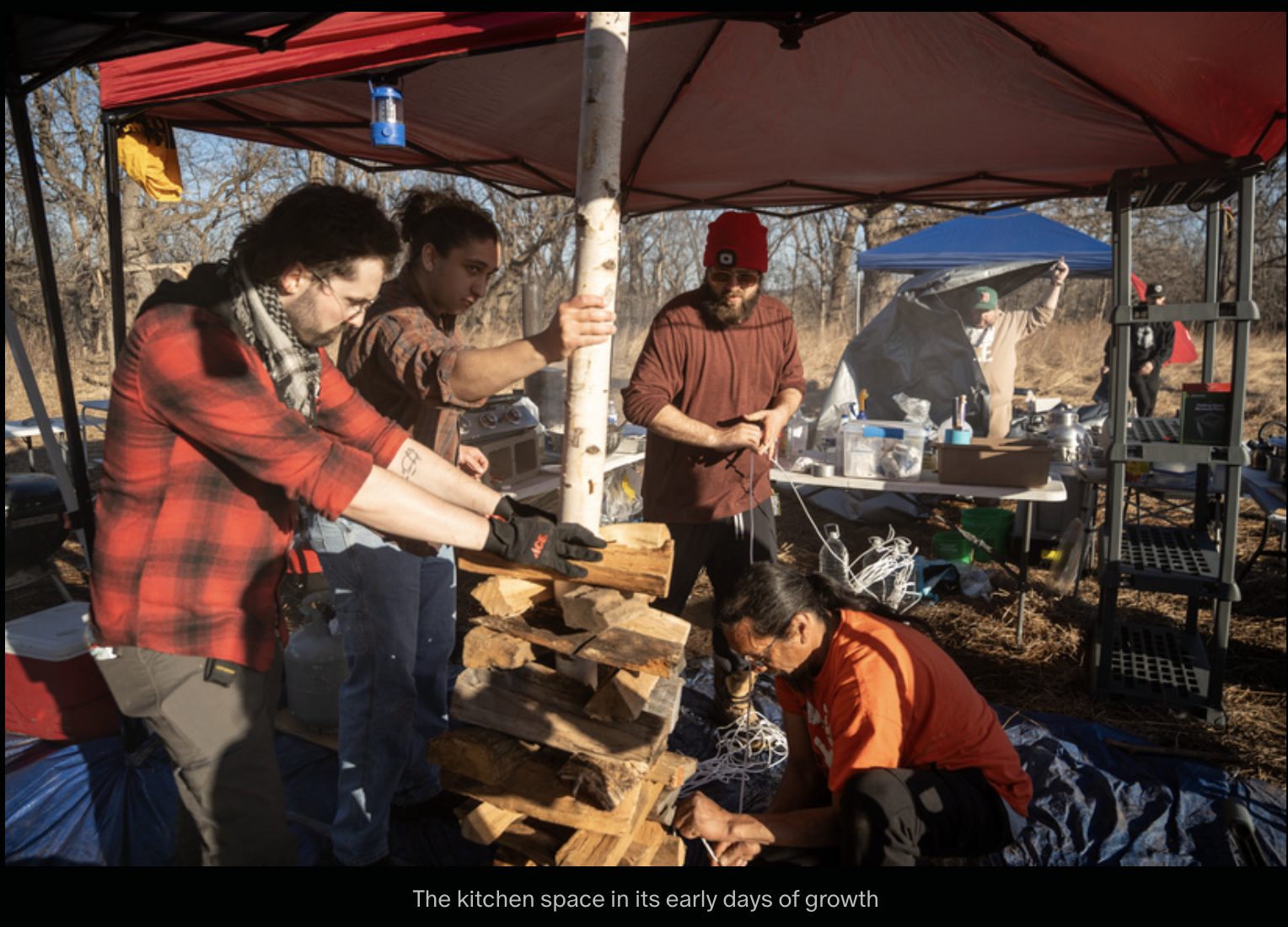
The camp was also a reminder of how beautiful community is and that the resources to care for each other are there. It offered a blueprint for a different way of doing life, where people care for each other and provide resources to one another. One example was the kitchen area: what started as a modest cooking space organically grew and transformed over the first week into what became a large six-canopy setup. It expanded as more people contributed food, supplies, and labor, sustaining the space throughout the camp. Medical supplies, both traditional and conventional, clothing, bedding, cooking gear, protective equipment, teaching materials for kids, winter gear, and an enormous amount of firewood all flowed into the camp. Much of it later flowed back out into the community, either because items were better used elsewhere or there was more than what the camp needed.
"How Can I Help?"
One question repeatedly asked of me and others at the camp was, “How can we help or what is needed?” Over time, the answer shifted. It moved from lists of items to an invitation to simply be present. While there were physical needs, the camp was primarily a space for people to experience. The response became: “Just come and see for yourself… come to the sacred fire, offer tobacco and prayer, listen to the space and the people, and you will know what is most needed.”
This dynamic also reflects a larger truth about helping in movements of humanity. Often, when people ask, “What can I send?” it comes with good intentions, but it can give a feeling of doing good without truly engaging with the work or the community. The real impact frequently comes from being present, participating, and responding to what is actually needed in the moment. What is sent or done from a distance may look very different than what the space or movement truly requires.
Understandably, some people, mostly non-Indigenous, white people, weren’t sure if they were allowed to visit. We (speaking as a white man) as white people, especially white men, have taken space too often and centered ourselves, assuming we deserve access to any place, event, or community we want. That is not how it works, or at least shouldn’t, and some spaces are not for us. This camp, however, was different. It was open to anyone willing to show up good way. Honor the land, the sacred fire, elders, and the people holding space there and be welcomed. A few times someone would be asked to leave and there were many conversations and teachings that were needed to help people understand the space. But overall, the camp welcomed all. The biggest “need” was simply for people to be present by the fire.
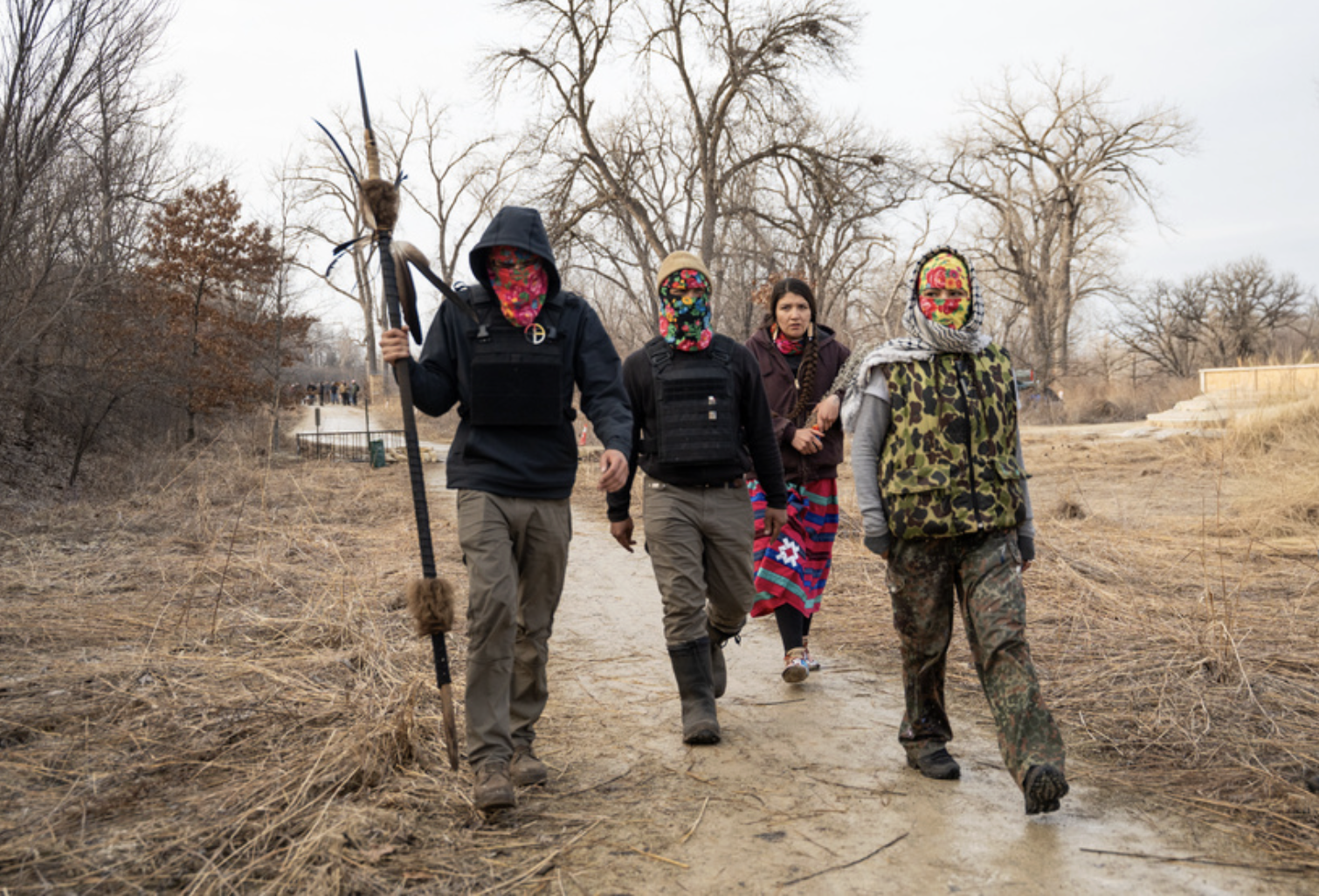
Many took up that call, to be present with the space, and fire. People found healing, rest, or safety for the first time in months of ICE occupying and terrorizing their communities. Others reconnected with their Native teachings and culture, while some discovered them for the first time. Elders shared stories with younger generations, children were taught how to lead, tan bison, or play traditional games. There were sweats, long meetings in tipis, teachings of old ways, and gifting of eagle feathers. Boys became men. There were also intergenerational conflicts, but throughout it all, the sacred fire remained the grounding and centering force.

Joe Crowshoe
MORE TO COME
I’m crafting a larger story of this camp that will include first-hand experiences and testimonies, focusing primarily on Indigenous voices. The write-up above is a sneak peek of this project. . The next step is waiting and collecting questions from those at the camp. Paid Patreon members will get first access to this story before it’s live here. JOIN TODAY and support this work! : https://www.patreon.com/HumanizingThroughStory
